How to check a mileage reading in the UK
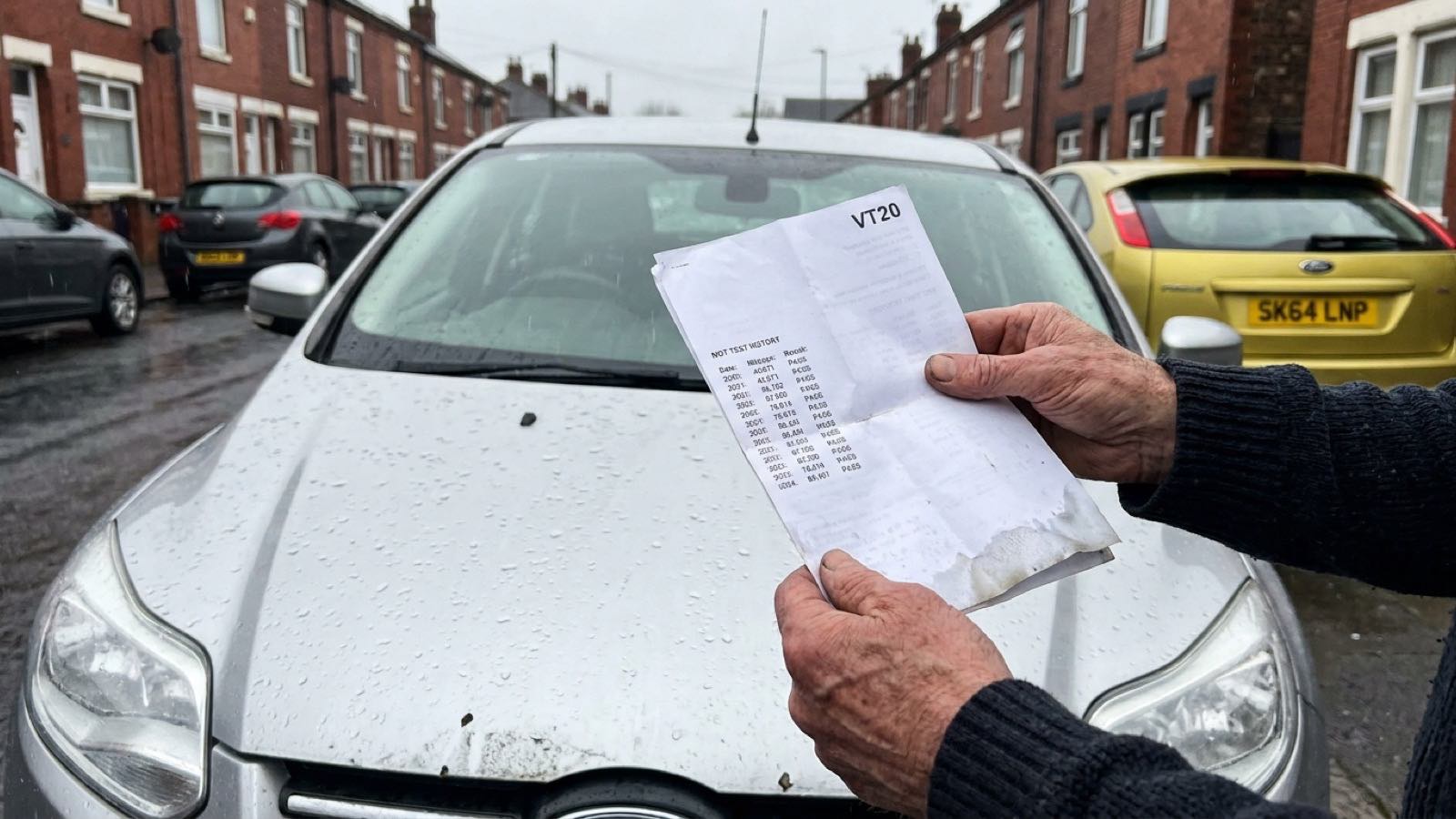
There is no separate UK government mileage database. The only official record most GB-registered cars carry is the reading a DVSA tester noted at each MOT test, published free at gov.uk/check-mot-history since 2005 (2018 for HGVs, trailers, buses and coaches). Read as a sequence, that record shows whether mileage climbs the way normal use would produce; a later reading lower than an earlier one is the clearest sign of a rolled-back odometer, though the checker itself doesn't flag that comparison for you. A car under three years old has no MOT-recorded mileage yet.
There's no separate UK mileage database. The only official reading most GB-registered cars carry comes from the MOT test, published free at gov.uk/check-mot-history for every test since 2005. Read across a car's tests, that figure should climb steadily; a later reading lower than an earlier one is the strongest sign the odometer has been wound back, though DVSA's own checker lists the numbers without flagging the comparison itself.
Applies to: Great Britain (vehicles with a GB registration and at least one MOT test on record) Source: DVSA (Driver and Vehicle Standards Agency), via gov.uk/check-mot-history Checked: August 2026 Main exception: a car under three years old has no MOT-recorded mileage yet, and an imported car's recorded sequence only starts once it has had a GB MOT
Where the official reading comes from
Every MOT test includes an odometer reading, taken and logged by the tester on the day. DVSA publishes that figure for every test in a car's history at gov.uk/check-mot-history, for cars, motorcycles and vans back to 2005 (2018 for HGVs, trailers, buses and coaches, 2017 for Northern Ireland). Enter a registration and the page lists each test with its date and the mileage recorded that day, alongside the pass or fail result. That's the entire official record: there is no separate DVLA mileage register a buyer can check independently of the MOT history.
Reading the sequence rather than one number
One reading in isolation tells you very little. What matters is the trend across every test a car has had: mileage should rise from one test to the next by an amount that roughly matches the time between them and the car's apparent use. Two figures three years apart that barely moved, or one test showing fewer miles than the one before it, are both worth a second look, the second far more than the first. Our country-neutral guide on odometer fraud goes through the physical checks (pedal wear, service book cross-references, tyre dates) that back up what the MOT record alone can suggest.
Why a young or recently imported car has nothing to compare
A car doesn't need its first MOT until the third anniversary of registration (the first anniversary, for some vehicle types), so an empty record on gov.uk's checker is not a gap to worry about before then: it's simply too soon for one to exist. A recently imported car works the same way in practice. Only GB MOT tests appear in this record, so the sequence starts at the first test carried out here, whatever the car's actual age or history abroad. Neither case means the mileage is unverifiable, only that the MOT history alone can't do the verifying; the service book and any paperwork from before import are what fill that gap.
Cross-checking against paperwork, not just the test list
The MOT record is the only official mileage source, but it isn't the only useful one. A service book with dates and mileage noted at each visit should move in step with the MOT figures; a big jump in the service book that the nearest MOT test doesn't reflect, or the other way round, is worth asking about directly. Ask, too, how long the seller has actually owned the car: a very short ownership window paired with an unusually flat mileage trend is worth more scrutiny than either fact on its own. None of this requires anything beyond what a seller should already be able to produce.
What a Plateop report adds
A Plateop report for a UK-registered car lines up every mileage reading DVSA has on file for that registration, in date order, and compares each one against the last. If a later reading comes in lower than an earlier one, that gets flagged automatically as part of the report: the same comparison described above, done for you rather than left to read off a list of dates and figures by eye. The report can only compare readings DVSA has actually recorded; it can't reconstruct a mileage history for a car too young to have one, or fill in the years a car spent abroad before its first GB test.
What this means for the buyer
Ask for the registration before you view the car and check the mileage sequence first, not last: a drop between two tests is a harder stop than almost anything else on a used-car checklist. For a car too young to have MOT history, or one recently brought into the country, lean on the service book and any invoices instead, since the official record genuinely has nothing yet. Check a UK-registered car's mileage history at plateop.com.