What the free MOT history check shows, and what it hides
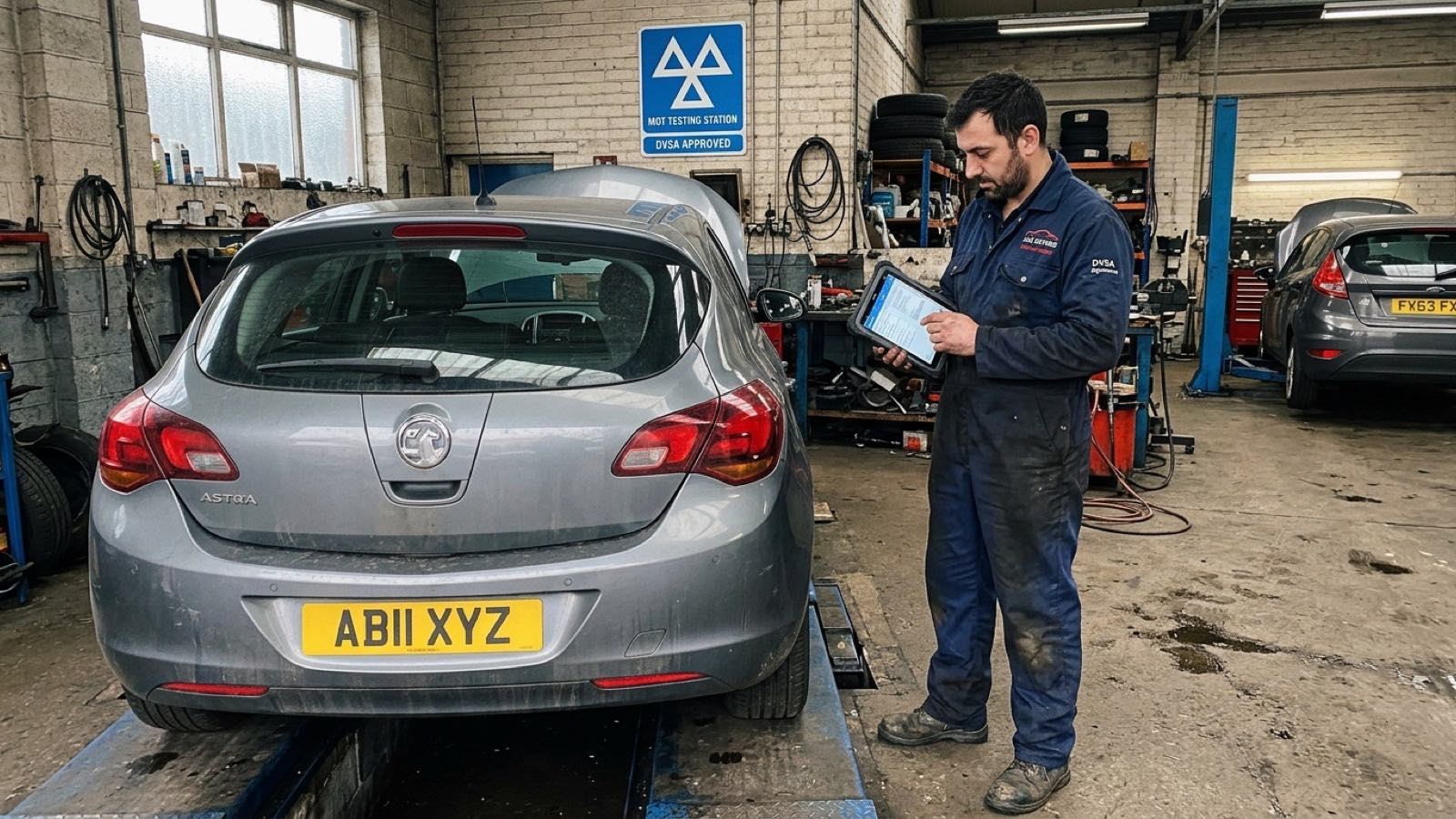
The free MOT history checker at gov.uk/check-mot-history, run by the Driver and Vehicle Standards Agency (DVSA), shows every MOT test done on a car since 2005 (2018 for HGVs, trailers, buses and coaches; 2017 for Northern Ireland): the test date, pass or fail result, mileage recorded, and, since 20 May 2018, whether each defect was dangerous, major, minor or advisory. It also carries a recall flag, when the manufacturer has reported one. What it can't show is anything from before a car's third birthday, or anything since its last test.
The free MOT history checker at gov.uk/check-mot-history shows every MOT test done on a car since 2005 (2018 for HGVs, trailers, buses and coaches, 2017 for Northern Ireland): the date, the pass or fail result, the mileage recorded, and, for tests carried out since 20 May 2018, whether each defect logged was dangerous, major, minor or just advisory. It also carries a recall flag, when the manufacturer has reported one. What it hides is anything from before a car turned three, since that's when the first MOT is due, and anything since the last test date.
Applies to: Great Britain (vehicles with a GB registration; Northern Ireland keeps a separate MOT record from 2017) Source: DVSA (Driver and Vehicle Standards Agency), via gov.uk/check-mot-history Checked: August 2026 Main exception: tests carried out before 20 May 2018 only show a pass or fail result, not the dangerous, major, minor or advisory categories used since
What the free checker actually contains
Run by DVSA, the checker takes just a registration number and returns, for every test on record, the date it happened, whether the car passed or failed, and the mileage the tester recorded that day. For a fuller view, England, Scotland and Wales let you add the V5C logbook reference number to see the test location and every defect noted, not only the ones that caused a fail. Current and past MOT certificates can be downloaded from the same page. Coverage only reaches back to 2005 for cars, motorcycles and vans; HGVs, trailers, buses and coaches are on record from 2018, and Northern Ireland runs its own MOT equivalent with records from 2017.
The four categories, and what changed in 2018
Since 20 May 2018, every defect DVSA testers log carries one of four labels. A dangerous defect fails the car outright, and DVSA is explicit that "a dangerous vehicle should never be driven on the road." A major defect also fails the test, for a problem serious enough to need repair before the car goes back on the road, but without the same immediate danger. A minor defect doesn't fail the car; DVSA describes it as a fault "not serious enough for the vehicle to fail," worth fixing but not urgent. An advisory works the same way, except it flags a component likely to fail soon rather than one that already has. Before that date, a test only recorded a plain pass or fail, with no severity attached to whatever caused it, which is the gap the main exception above refers to.
The recall flag hiding inside the history
Alongside the test record, DVSA states plainly: "your MOT history may also tell you if your vehicle has been recalled for a safety reason, depending on the manufacturer." That hedge matters. The flag only shows what the manufacturer has actually reported to DVSA; it isn't a guarantee that no recall exists if the flag is blank or unclear. Our companion guide on checking outstanding recalls on a UK car walks through the dedicated recall checker to run alongside this one.
What a clean or empty history doesn't tell you
A spotless run of passes says a car cleared its tests, not that nothing has happened since the most recent one, which can be up to a year old once a car is past three. A car with no history at all is very often just young, not concerning: the first MOT isn't due until the third anniversary of registration, or the first anniversary for some vehicle types. What the checker never covers, whatever the car's age, is outstanding finance, a stolen marker, or an insurance write-off record. None of that sits in DVSA's MOT data, a gap our guide on what paid history checks cover that free UK checks do not sets out in full. Service work done outside an MOT, and any accident repaired well enough that it never affected a test result, also stay invisible here.
What this means for the buyer
Start with the expiry date and the pass or fail pattern, then read the defects in order: a minor or advisory that reappears as a major at the next test usually means a repair was skipped, not fixed, and is worth asking the seller about directly. Treat a young car's empty history as normal rather than suspicious, and treat a recall flag that says nothing as unresolved, not clear. A Plateop report pulls a UK-registered car's MOT history, its defect record by category, and the expiry date from DVSA automatically as soon as you look up the registration, exactly as DVSA has it on file. Check a UK-registered car before you buy at plateop.com.